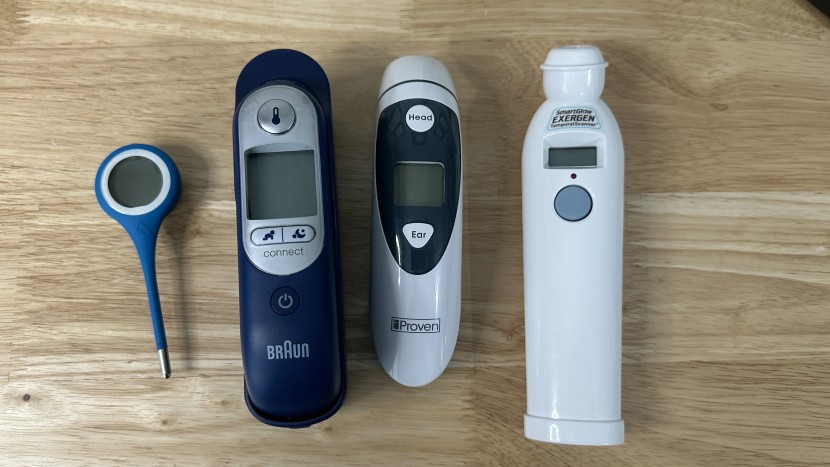
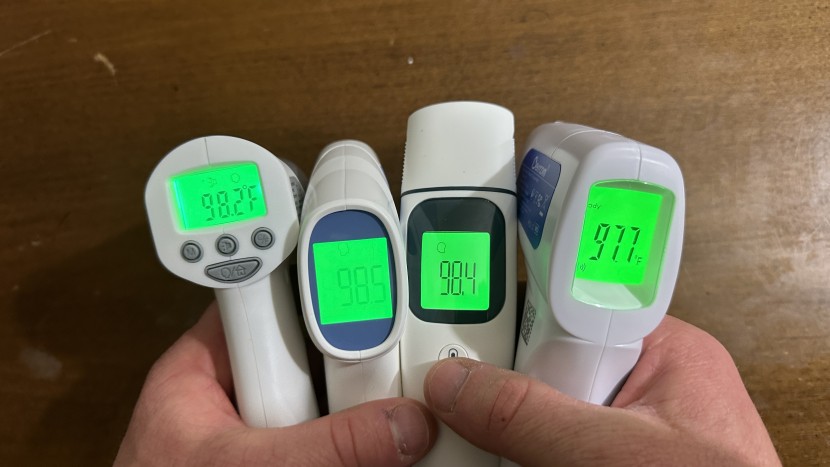
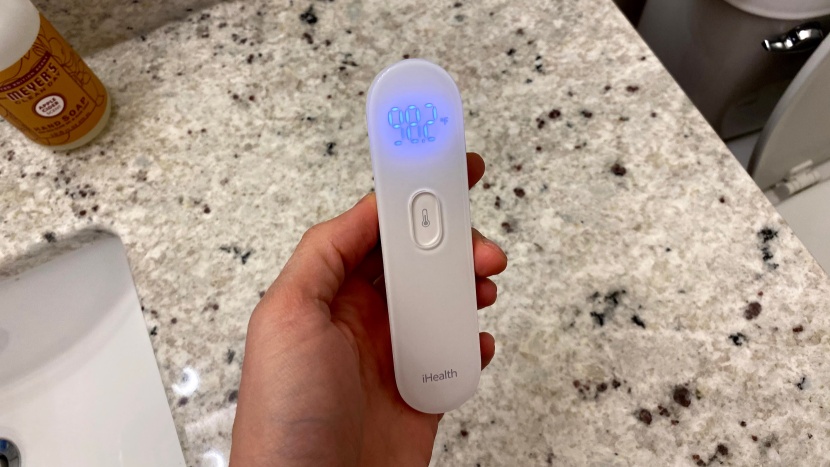
With a nurse practitioner and a respiratory therapist on our team of experts, we knew exactly how to find the best thermometer. Plus, our testers are also parents, and even with their medical training, they know how much a kid-friendly thermometer can make the middle-of-the-night temperature checks much less chaotic.
The GoodBaby Touchless 2-in-1 is the best overall thermometer for most people, thanks to a fast and reliable display. This is a great option for kids, but we also love the versatility of the Goodbaby FCIR-100 as it takes ear and forehead temps. The Boncare 10-Second Digital is our favorite budget option with its accurate reads and straightforward use.
Keeping track of your health is key to living your best life. Other than a thermometer, some helpful things to own are a good blood pressure monitor and a reliable pulse oximeter. If you want to gather real-time data throughout your day to be stored and reviewed on a smartphone, head over to our list of smart watches.
Editor’s Note: On June 16, 2025, we updated this review to include new recommendations for babies and kids and ensure the rest of our lineup is still up to date.
Quick Look
The Best Thermometers
Full results from testing 14 top products are in our Product Comparison Table and Analysis & Test Results sections.
Best Touchless Thermometer
GoodBaby Touchless 2-in-1 IR 2000

| Display Type | Digital |
|---|---|
| Sensor Type | Forehead, surface |
| Measured Read Time | 1 second |
| Measured Average Temperature Deviation at 98° F | 0.08 |
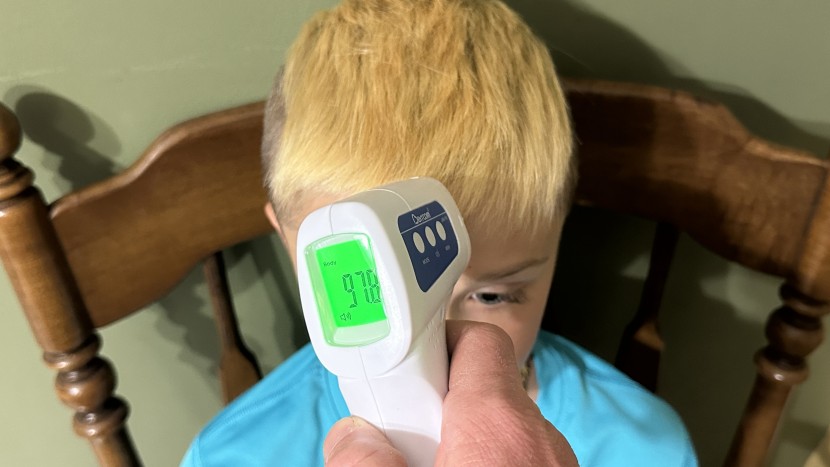
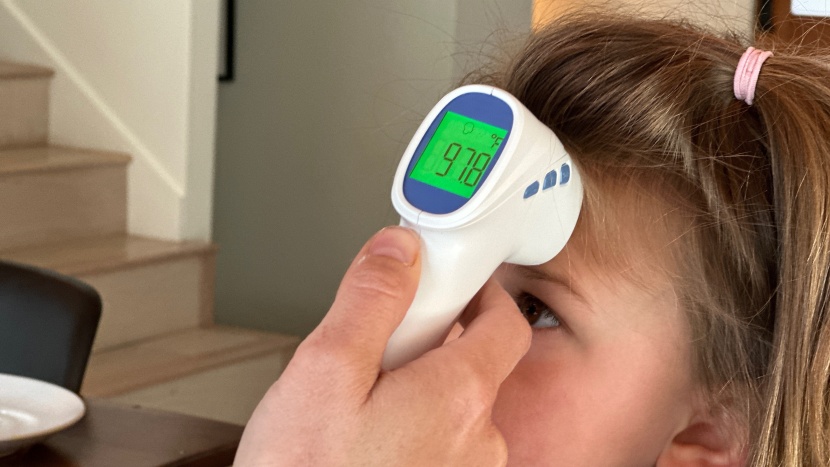
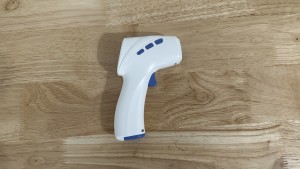
For most people, I recommend the GoodBaby Touchless 2-in-1 IR 2000. The thermometer has near-instantaneous results with a large readout on the screen and a green, yellow, or red backlight, depending on the temperature. This device is about as easy as they come with the large buttons and point-and-shoot operation. Tester and nurse practitioner, Travis Reddinger, notes, “The thermometer simply points and clicks, and you immediately have a reading. I even used it to see if cookware was cool enough to touch when baking.” The IR 2000 is also relatively easy to clean — an ever-so-helpful attribute when in close contact with potentially ill individuals.
I don’t have many issues with the IR 2000, but my team prefers thermometers that “beep” a bit louder to alert the user that the device has completed its job. In the post-COVID-19 world, these types of thermometers are often used by businesses in crowded, noisy environments, and it’s nice to know a complete reading has been taken. Our testing revealed this model is reasonably accurate and completely sufficient for home use. Still, it doesn’t offer the near-precise readings of expensive medical-grade alternatives like the Welch Allyn Sure Temp plus 690/692, which is widely used in the medical industry. However, I am still happy to recommend this thermometer for most people, especially those after a touchless option.
Best Thermometer for Babies and Kids
GoodBaby FCIR-100
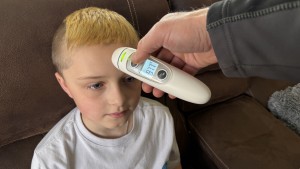
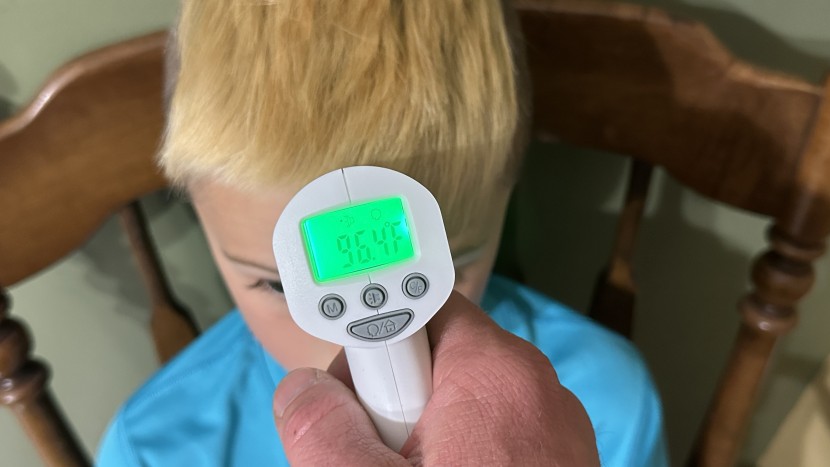
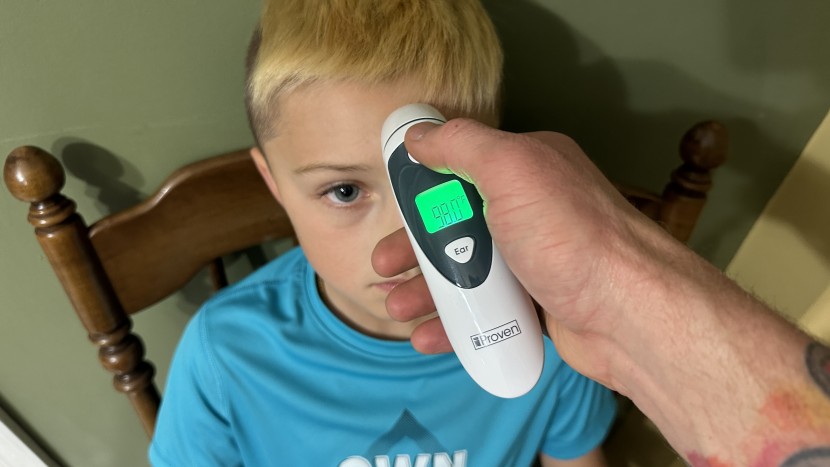
With a little one at home, I know how important it is to find a reliable and no-fuss thermometer. For me and my team of parent testers, the Goodbaby FCIR-100 fit the requirements. This thermometer takes both forehead and ear measurements and can even be used to measure surface temperatures of objects like bottles or food. The dual functionality means you can double-check your results, which I appreciated when my toddler wasn’t feeling well. A tester noted, “when my son was sick, I was able to measure his temperature without waking him up.” A large backlit display provides the temperature, and a color indicator above the scan button has a visual indicator corresponding to the resulting temperature: green for normal, yellow for elevated, and red for fever. The thermometer has an ergonomic design, making it comfortable to use in a variety of positions if you are trying to navigate a squirming child.
The FCIR-100 is a solid choice for a thermometer and doesn’t have many negative aspects. I might be nitpicking at this point, but the only complaint I had was the tone volume when the reading is complete. It would be nice to have a louder beep, but the softer tone is appreciated if you are trying to check the temperature of a sleeping child. The fast and accurate temperature measurement, combined with the multi-function scanning option, makes this a great choice for monitoring the little ones. The GoodBaby Touchless 2-in-1 IR 2000 is also a suitable choice for babies and kids since it takes touchless readings. However, it doesn’t have the dual functionality.
Best Bang for the Buck
Boncare 10-Second Digital

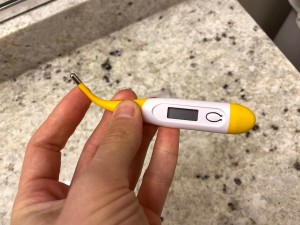
| Display Type | Digital |
|---|---|
| Sensor Type | Tongue |
| Measured Read Time | 10.6 seconds |
| Measured Average Temperature Deviation at 98° F | 0.05 |
The Boncare 10-Second Digital is a great choice for those shopping for a thermometer on a shoestring budget. One of the primary benefits of a probe-style thermometer (as opposed to infrared or the ancient mercury models) is the impressive level of accuracy. During our 98°F accuracy assessment, this model was nearly spot on with our medical-grade control models. The Boncare is waterproof, which makes it ideal for use with fussy children, and also incredibly easy to clean. With three different ways to read temperatures, it is suitable for infants, the elderly, and everybody in between. The Boncare is super budget-friendly, costing a tiny fraction of the medical-grade models while producing extremely similar temperature readings. One tester mentioned, “For the few times a year I need a thermometer, the Boncare is simple, accurate, and inexpensive, which is perfect for my needs.”
The biggest downside of probe thermometers is the lengthy read time—ten seconds is longer than we would expect some children to sit still. For a touchless thermometer with a near-instantaneous reading, check out the GoodBaby IR 2000. The Boncare 10-Second Digital’s display is also relatively small and not backlit, so it’s best to use this device in a well-lit area. Drawbacks aside, though, it’s hard to beat the price.
Best Smart Thermometer
Kinsa QuickCare

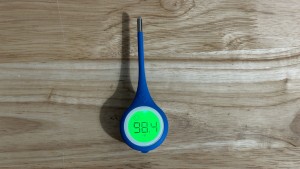
| Display Type | Digital |
|---|---|
| Sensor Type | Tongue |
| Measured Read Time | 5.6 seconds |
| Measured Average Temperature Deviation at 98° F | 0.7 |
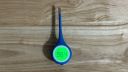
The Kinsa QuickCare is a Bluetooth smart thermometer that tracks more than just the patient’s temperature when combined with the accompanying app. The Kinsa is a probe-style thermometer with a large, easy-to-read display and color alerts that correspond in case of fever. In my tests, this device was simple to operate, using a single button on the probe to take temperature and settings. Pair the device with a smartphone via Bluetooth and unlock its full potential. Users can create individual profiles for family members, track temperature and symptoms, track medication administration times, and set reminders for the next dose. Users can also get guidance and care recommendations related to their symptoms or see data about illnesses in the local area. “The app is a lot more useful than I had expected,” a tester mentioned, “setting medication reminders and tracking the fever results was really helpful when I’m sleep-deprived and stressed.”
The stored information may be convenient but not every user needs the extra technology. The thermometer wants you to use the app, but you can bypass the screen and use it as a simple digital thermometer. If you have zero interest in dealing with another smartphone app, check out the Vicks SpeedRead, which is accurate, easy to use, and reasonably priced. Also, the single button at the top of the probe on the Kinsa QuickCare might be small for folks with larger hands. During testing, I found the readings to be inaccurate around the lower 90s Fahrenheit, and though I like the safety aspect of the flexible tip, some might find it challenging if they have larger fingers. Minor criticisms aside, the Kinsa QuickCare offers many features and is a great option for anyone wanting to keep digital records of illnesses or track medication dosing.
Best Medical-Grade Thermometer
Welch Allyn Sure Temp Plus 690/692
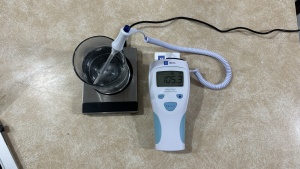
| Display Type | Digital |
|---|---|
| Sensor Type | Oral, axillary, rectal |
| Measured Read Time | 10 seconds |
| Measured Average Temperature Deviation at 98° F | 0 |
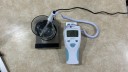
I realize not everyone is interested in spending the cash to get a medical-grade thermometer. However, if you are in the market for one, the Welch Allyn Sure Temp Plus 690/692 is the one you want on your side. This thermometer’s accuracy is only matched by the Exergen TAT-5000 – also a pricey medical-grade option. That said, if you want the same temperature readings as your local clinic, this is the one that will give it to you. Not only that, but it is capable of giving readings from multiple locations, including orally, axillary (armpit), and rectally. None other in our lineup is capable of taking readings in all of these locations. Our reviewer Travis Reddinger mentioned, “When there is no substitute for accuracy, the Welch Allyn is the thermometer of choice. We used this thermometer in almost every medical setting I have worked in, and with good reason”. Just like at your doctor’s office, these are compatible with disposable sleeves, so you can keep the germs away especially if you have multiple people using the device. The large screen makes it easy to see the reading, and it is simple to switch between adult and child modes.
If you have a young child who refuses to sit still, this might not be the option for you. The reading takes anywhere from 4 to 15 seconds, depending on the mode. I measured most readings around 10 seconds, but this can still be too long for a young kiddo. Instead, the aforementioned Exergen TAT-5000 only takes two seconds to get an accurate reading. Still, I think the Welch Allyn is easier to clean as you simply pop off the disposable sleeve. There is no doubt that this is a pricey model, however, during my tests I had zero deviation in controlled temperature readings, meaning its readings are top-tier. It is no wonder that this model is widely seen in healthcare settings.
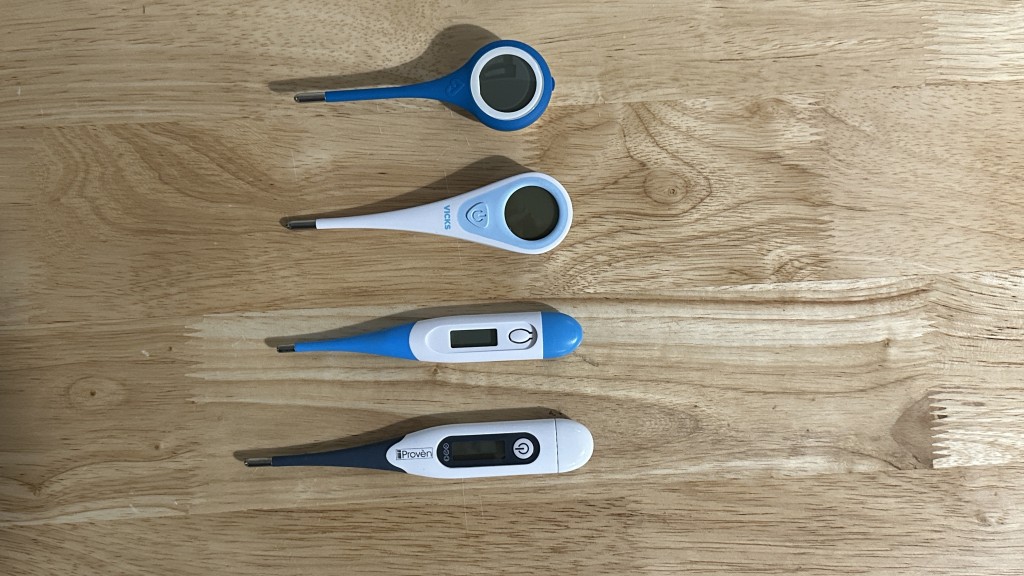
Product Comparison Table
“>
How We Tested
Here at GearLab, we purchase everything we test at retail price and never accept manufacturer samples, so you get unbiased information to help make an informed decision. Over the past few years, we have researched dozens of different thermometers and tested 17 different models to compare ease of use, accuracy, ease of disinfection, and how long to register a reading. We also take note of any additional features that may impact the performance or be important to the user. We subjected each thermometer to multiple tests and recorded how each device performed in the given area. Scores of the individual test metrics are weighted and combined for a product’s overall score.
We calculated our total scores using these four rating metrics:
- Accuracy (40% of overall score weighting)
- Ease of Use (25% weighting)
- Cleaning (25% weighting)
- Speed (10% weighting)
Why Trust GearLab
Travis Reddinger: I have almost 20 years of experience in the medical field, from prehospital EMS to in-hospital emergency medicine and critical care, along with being an automotive mechanic since I graduated high school. Because of my experience and technical knowledge, I am often asked for input on new products and devices the hospital is considering to improve patient care. While caring for some of the sickest patients in a Level 1 Trauma Hospital, I understand the necessity for fast, accurate results in a simple-to-use device.
Becca Glades: Like Travis, I have spent many long days and nights in the emergency room of a Level 1 Trauma hospital as a respiratory therapist. Now, as a mom to a toddler, fevers are present more than I’d like. But they are an inevitable part of childhood, and knowing I can get an instant temperature read is an invaluable tool for deciding my next move. That said, I have been through many thermometers to find one that I can reliably use to get a good read on my squirmy little one.
Analysis and Test Results
Testing for thermometers emphasizes four rating metrics. For each one, we highlight top contenders that outperform the rest and others that fall short in the competition. Though we assign a weight to each metric to get an overall score for each thermometer, the intent is to provide more granular information so you can assess each product based on what is important to you.
What’s the Best Value?
Though value is not formally considered in overall product scoring, it likely plays an important role in your purchase decision. In our reviews, value is what you get relative to what you pay. In quantitative terms, products with a comparatively high score and low price have a higher value. Based on our testing, models that come away as high-value options include the BerrCom Non-Contact Infrared for a contactless model and the Vicks SpeedRead for a more traditional, digital stick thermometer. The Welch Allyn Sure Temp Plus 690/692 and the Exergen TAT-5000 offer the most in terms of practically precise accuracy but fall short when it comes to overall ease of use and are devoid of any special features, which is great news — it means that you don’t need to spend hundreds of dollars to get a reliable and accurate thermometer that is much more user-friendly than the versions used by hospitals.
Accuracy
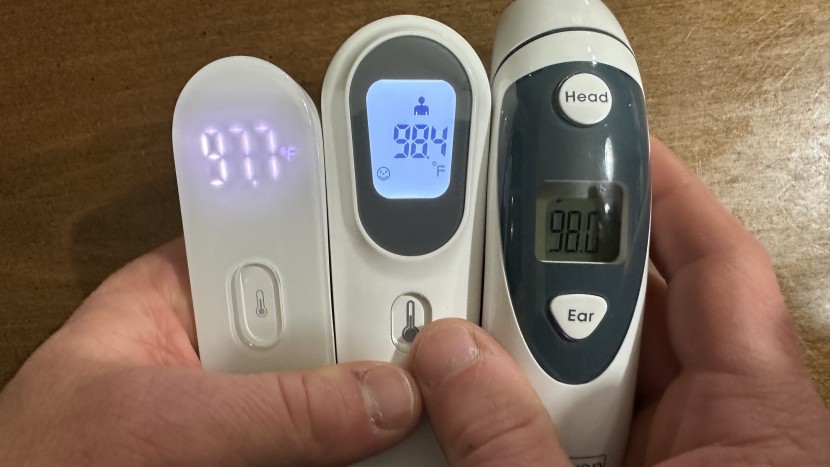
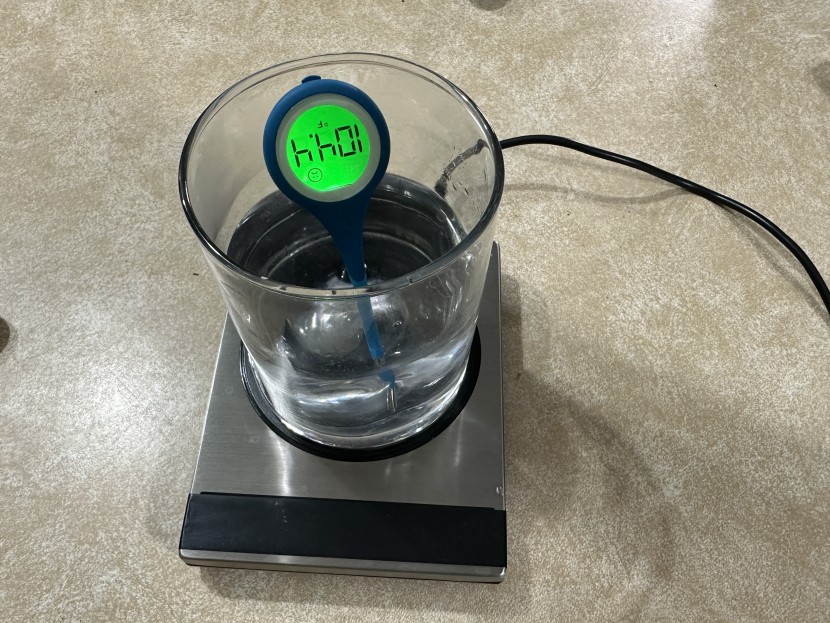
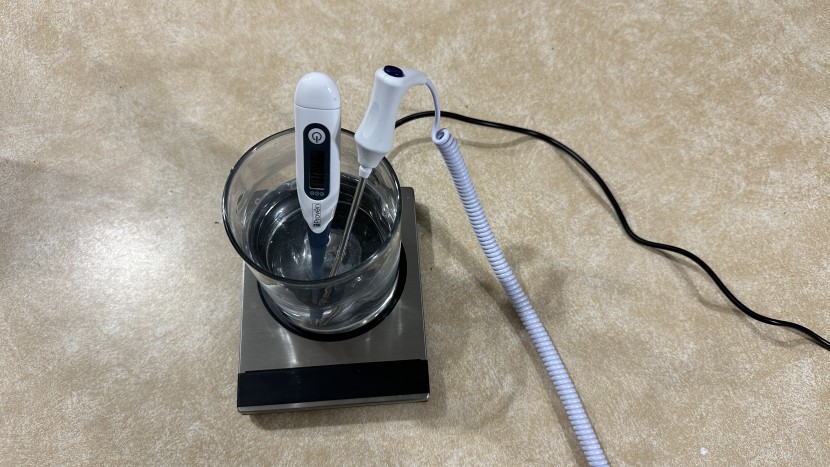
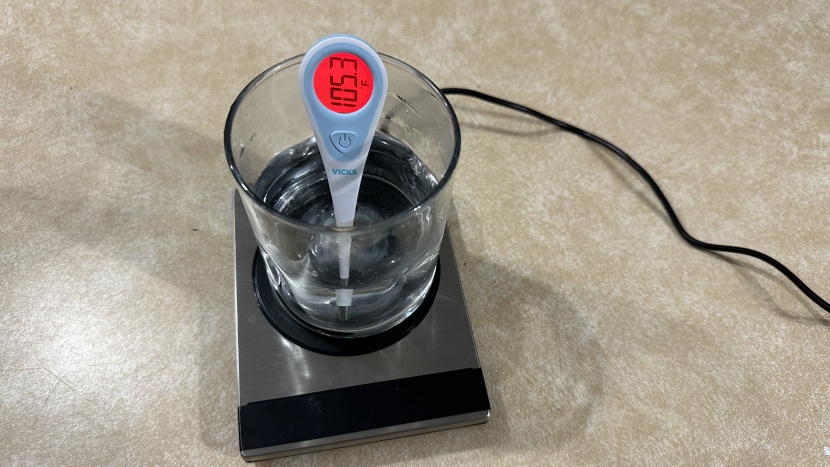
Accuracy is the most important aspect to consider when choosing a thermometer. My tests were fairly simple and straightforward to test for accuracy. I heated water to precisely 90, 98, and 105 degrees Fahrenheit. At each temperature, I allowed the thermometers to take their readings, which allowed me to see how far or close the readings were to the actual temperature. Not only that, but I took the temperature multiple times to see how consistent the readings were at the exact temperature.
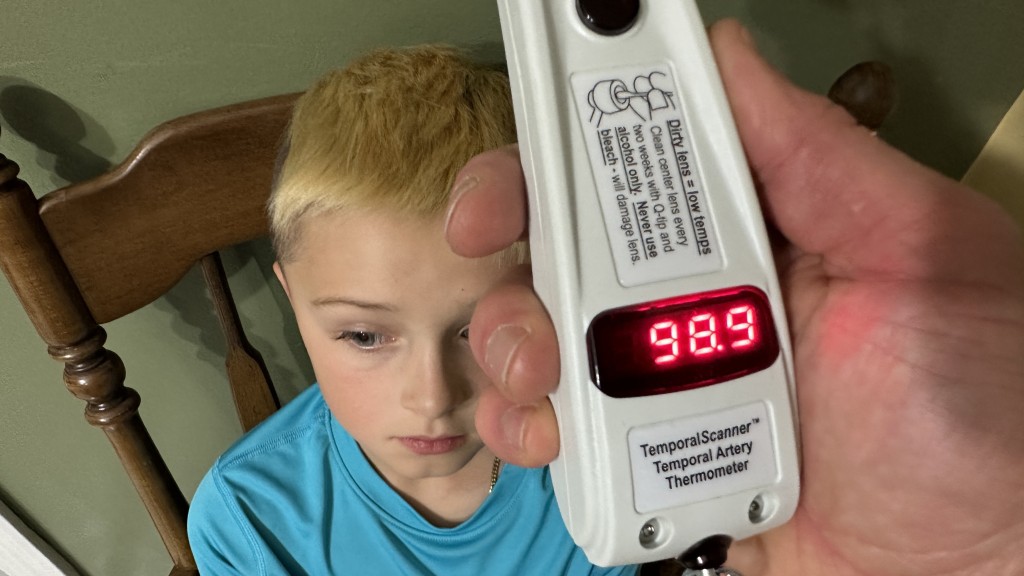
Unsurprisingly, the medical-grade models were the closest to our control temperatures. The Welch Allyn Sure Temp Plus 690/692 and Exergen TAT-5000 had no deviation and were reliable options in our testing. It is no wonder why these exact thermometers are used in hospitals and clinics.
“>
If you aren’t interested in spending a lot on a medical-grade thermometer, I understand, and you are in luck. Every model in this review did well overall for accuracy, but some had less deviation from the control than others. Specifically, the Braun Thermoscan 7+, GoodBaby FCIR-100, Goodbaby Touchless 2-in-1 IR 2000, and iHealth No-Touch were the most accurate infrared thermometers. The Boncare 10-Second Digital was the probe-style model with the smallest deviation from the control temperature.
The rest of the thermometers performed well. Many of the deviations occurred at the lower temperatures. Meanwhile, all thermometers gave fairly accurate reports at normal to fever situations, which is the more common scenario. Consistent readings are also important, with our most consistent and reliable readings being given by the medical-grade options and the Boncare 10-Second, GoodBaby models, and Braun Thermoscan 7+.
“>
Ease of Use
If you are taking your own temperature, you might not have much issue with ease of use. However, the screen size, button use, and beep level can greatly improve your experience. Further, parents often struggle to get a reliable read on a wiggling toddler, and a quick, easy thermometer can save a lot of headaches.
The Kinsa QuickCare probe thermometer is a single-button device that proved to be one of the easiest models to use that I’ve ever tested. The Kinsa has a round head with a large, bright, color-coded screen that is easy to read. The probe end is flexible and more comfortable than some other thermometers since they read temperature internally. The thermometer has a small single button on the top that turns the probe on and is ready for measurements. Some may find the button a little difficult to use if they have large hands or lack dexterity, but I found no issues during testing. The Quickcare does have an app that can be downloaded and paired with the device, but it is not necessary for use. Battery replacement is simple: remove the backplate to access the CR2032.
With kids involved, particularly babies and toddlers, I highly recommend the GoodBaby Touchless 2-in-1 or the GoodBaby FCIR-100. Both models are quick and easy to get a reading. The Touchless 2-in-1, like its name implies, is a touch-free model. Simply point the thermometer at the forehead and push the button. I appreciated the dual functionality of the FCIR-100, which measures ear and forehead temperatures.
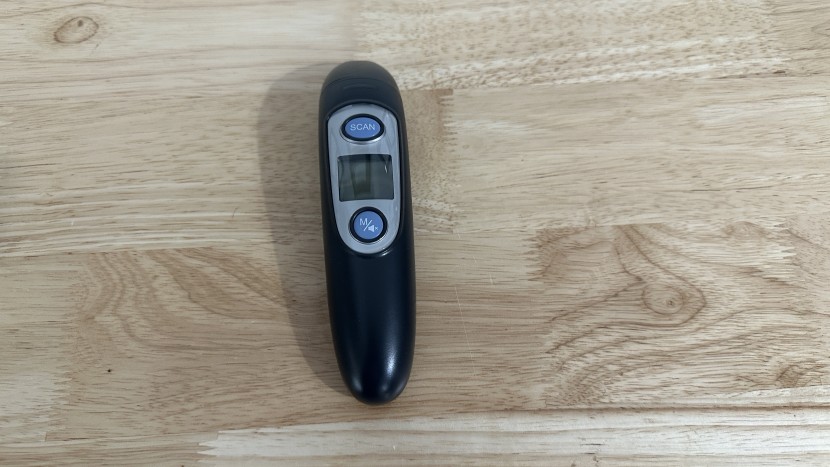

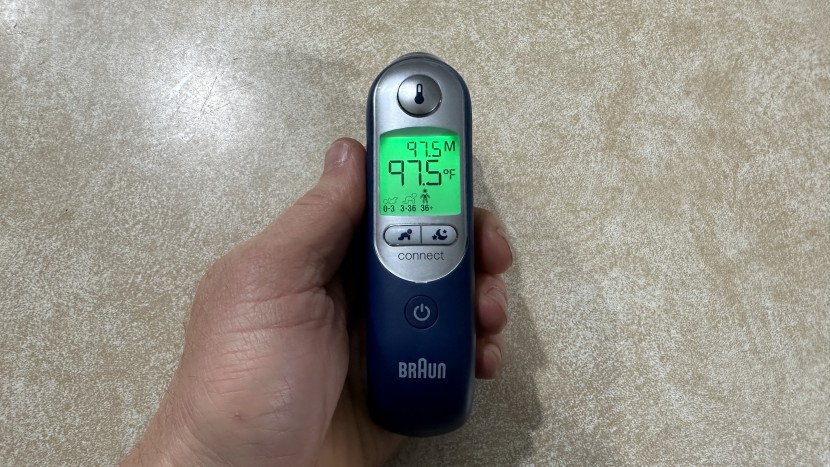
The Braun Thermoscan 7 is an in-ear thermometer with a large display, making it really easy to read with well-placed buttons, but it loses points by needing a disposable plastic probe cover to take a reading. The Vicks SpeedRead is also simple with a single button and easy-to-read display, but I found accessing the battery to be more difficult than necessary.
“>